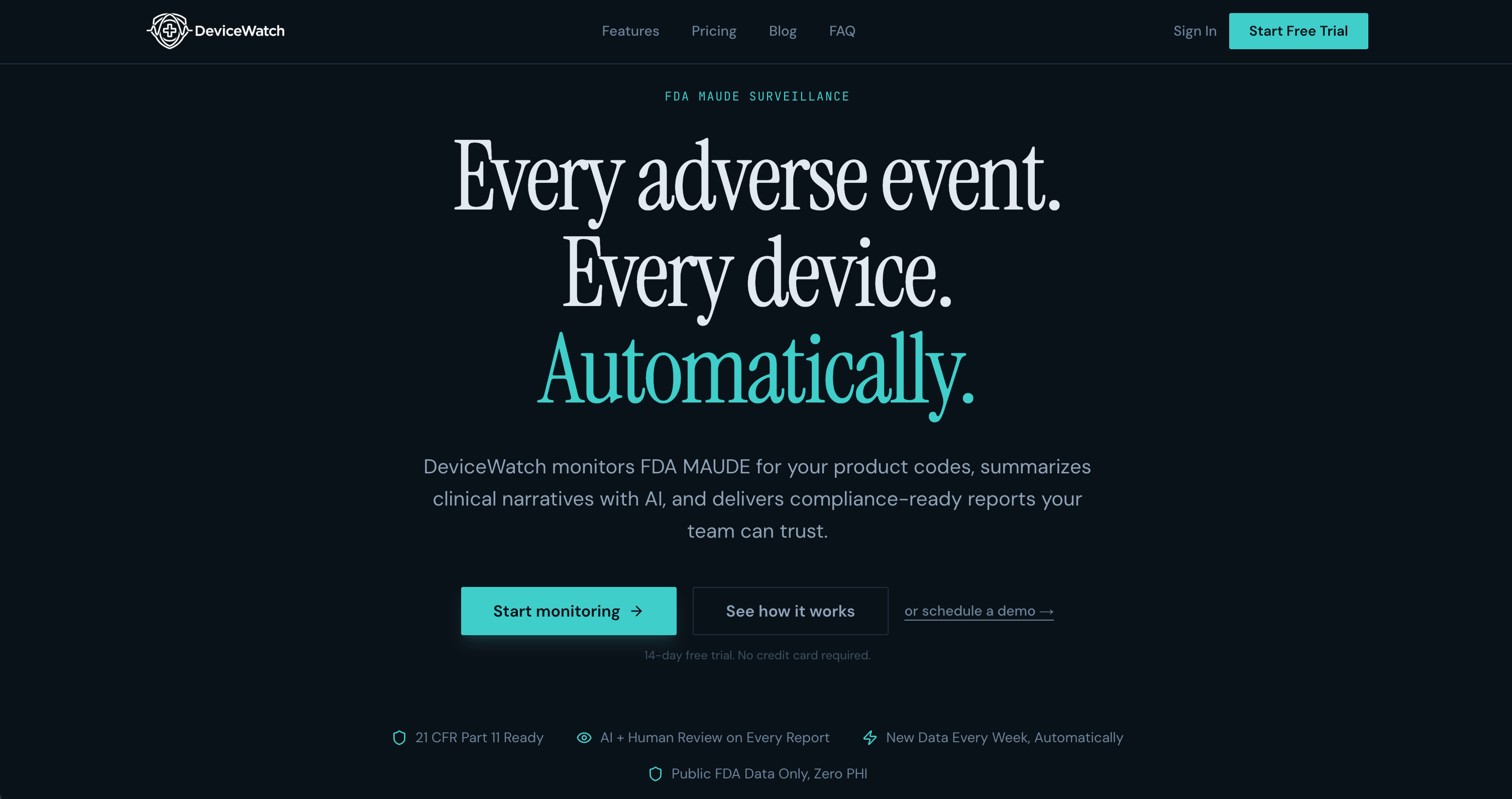
We built DeviceWatch because we lived the problem.
Regulatory teams drowning in adverse event data. Manual MAUDE searches consuming entire mornings. PSUR preparation stretching into weeks. Competitor safety signals discovered through news articles instead of proactive monitoring.
DeviceWatch connects to the openFDA API, automatically ingests adverse event reports for your product codes, and uses AI to summarize every clinical narrative. Human reviewers verify each summary. Trend analytics surface emerging signals. PDF reports export when you need them.
What we're launching with:
Automated weekly data ingestion from FDA MAUDE
AI-powered adverse event summarization with human-in-the-loop review
Competitor device monitoring — track any product code alongside yours
Signal detection dashboards with severity and failure mode analytics
PSUR-ready trend reports and PDF exports
Slack, webhook, and email notifications
21 CFR Part 11 compliant audit trails.
The problem we're solving
Every week, the FDA publishes thousands of adverse event reports in the MAUDE database. Medical device companies are required to monitor these reports under 21 CFR Part 803 and EU MDR. Most teams do this with manual database searches, Excel spreadsheets, and email chains.
A single regulatory analyst can spend 4-6 hours per week just on data collection — before any actual analysis begins. Multiply that by 10 product codes. Add competitor devices you should be monitoring but aren't. Factor in the events you miss because the search window was wrong or the product code mapping was incomplete.
This isn't a workflow problem. It's a structural problem. The volume of adverse event data is growing faster than teams can scale.
Why AI with human-in-the-loop.
Every FDA MAUDE report contains a free-text narrative. Some are three sentences. Some are three pages of dense clinical detail mixed with manufacturing jargon and patient outcomes. Your regulatory team is reading every single one of these manually, highlighting failure modes, noting severity, and flagging signals.
DeviceWatch uses AI to analyze each adverse event narrative and extract structured information: primary failure mode classification, severity assessment, root cause indicators, and an executive summary in plain language.
But here's what matters: we don't remove the human from the loop. Every AI summary goes into a review queue where your qualified team members acknowledge, edit, or flag the analysis before it enters your compliance record. AI is a powerful tool for processing volume, but 21 CFR Part 803 compliance requires human judgment. DeviceWatch gives you both.
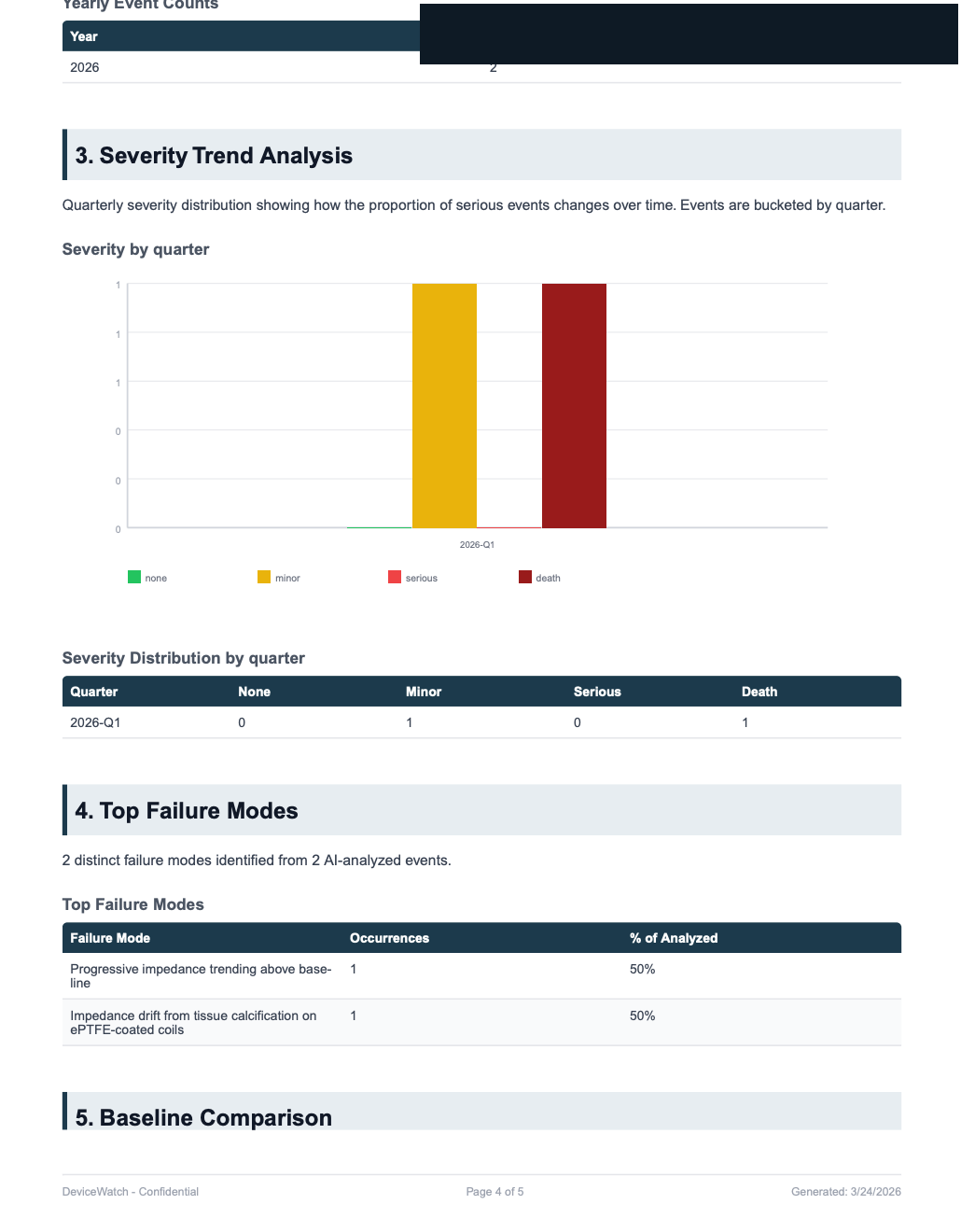
Competitor intelligence
Under EU MDR Articles 83-86, manufacturers are expected to demonstrate awareness of the broader device landscape. DeviceWatch allows you to track adverse events for competitor devices alongside your own products. When a competitor device starts showing an adverse event trend, you know about it before it makes the news.
In practice, this means you can spot competitor safety signals before they become 483s or recalls, benchmark your adverse event profile against the field, strengthen your PSUR trend analysis with comparative data, and prepare better responses when notified bodies ask about "state of the art."
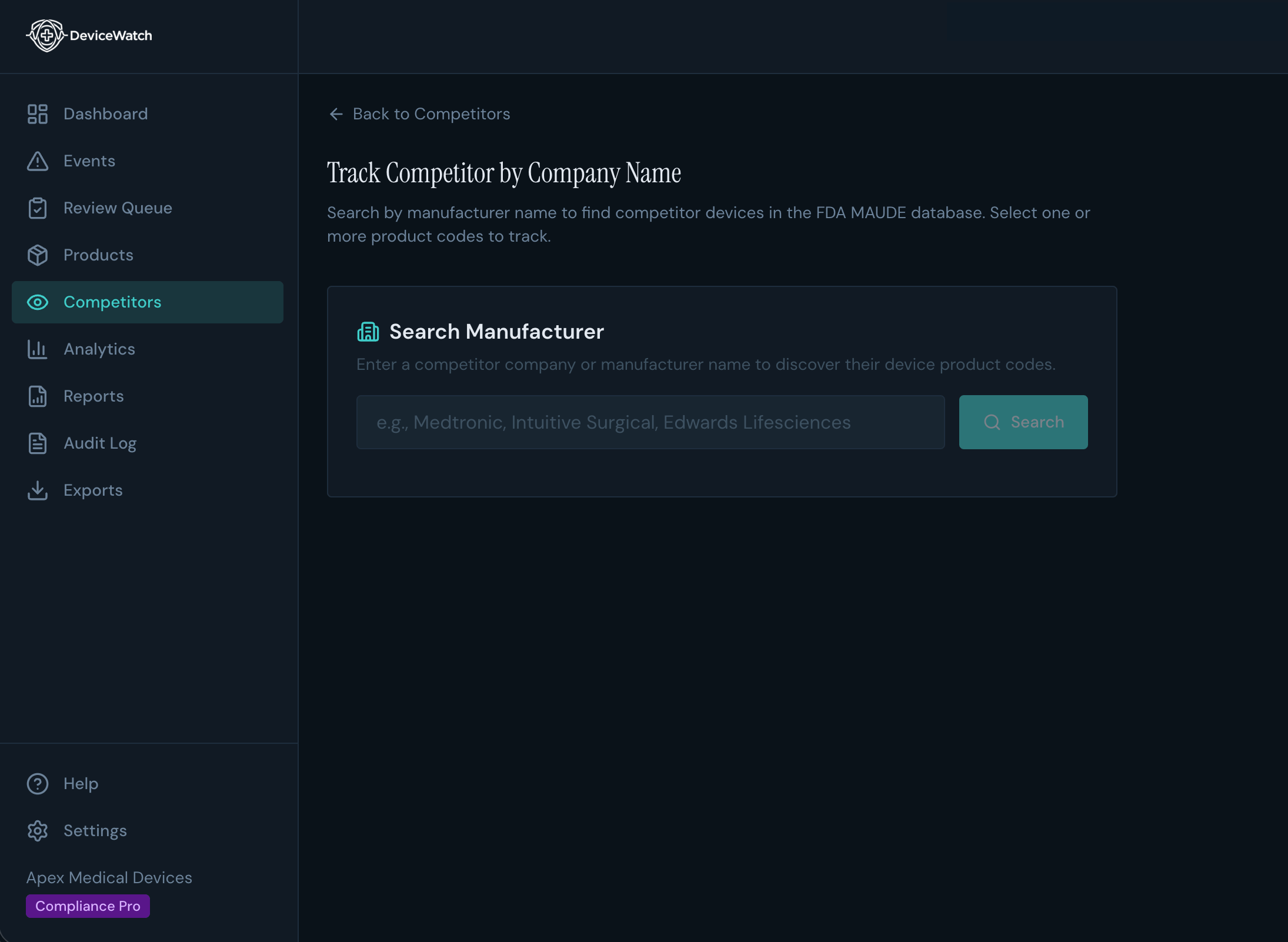
Pricing
Two plans: Growth ($499/mo), Compliance Pro ($999/mo). Both include a 14-day free trial with no credit card required.
If your team spends more than an hour a week on manual MAUDE surveillance, we built this for you.
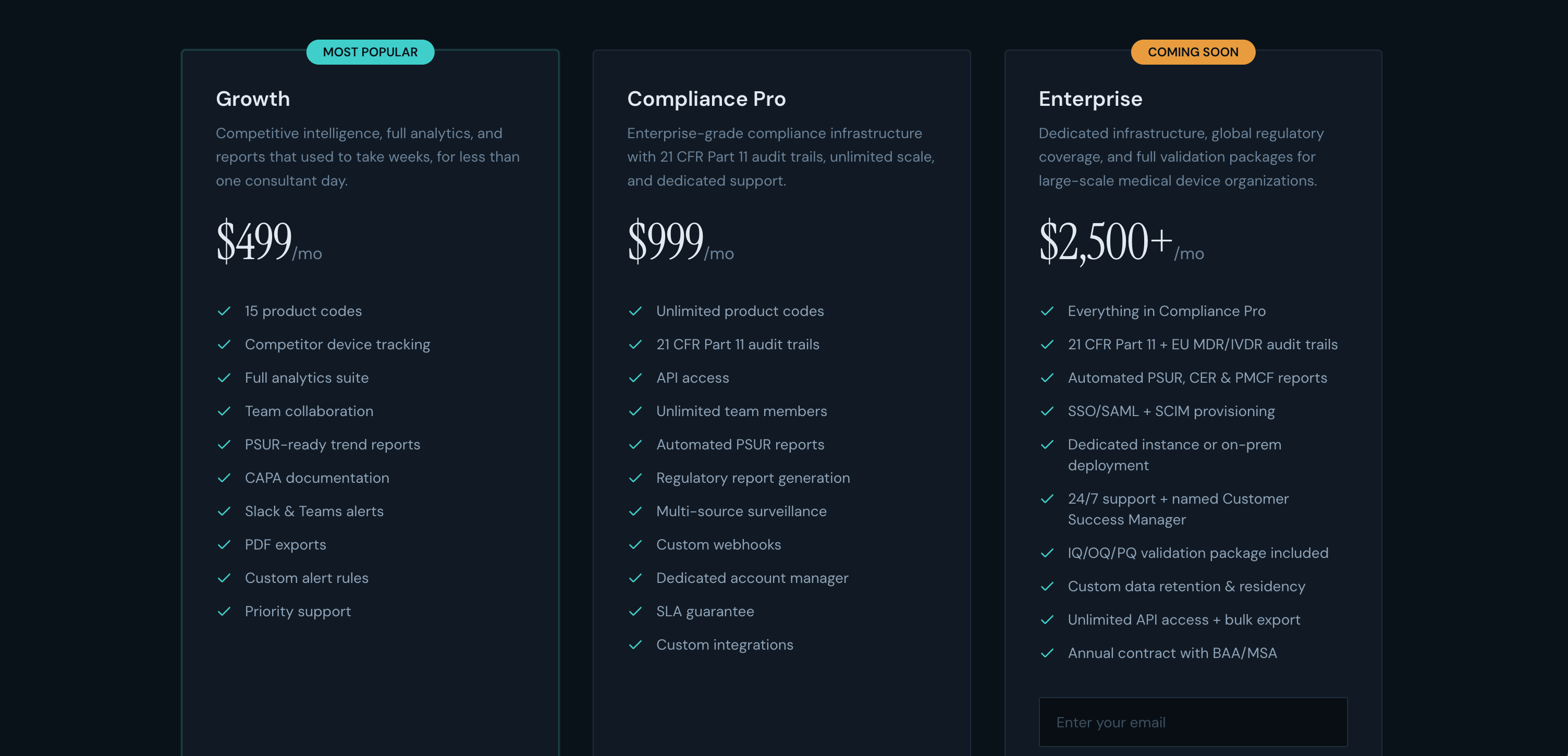
https://devicewatch.app
Start your free trial at devicewatch.app