VibeVal
IEC 62304 compliance validation, as an API. A Quality Engineer pastes a code diff, picks a risk class, and gets back a CSA-aligned validation assessment in seconds instead of hours — with a SHA-256 attestation ready for the Design History File.
Private beta — contact for access.
Diff in, verdict out
Send the change
POST a code diff with its risk class (A / B / C), change type, and a line of clinical context to the /v1/validate endpoint.
Rules + rationale
A rule engine checks the IEC 62304 §5.5–5.7 structural requirements for that risk class, and Claude drafts a CSA-style validation rationale in plain language.
Attest & file
You get a structural compliance verdict, the rationale, and a SHA-256 attestation of the inputs and result — audit-ready for the Design History File.
One call, in your pipeline
curl -X POST https://vibeval.vercel.app/v1/validate \
  -H "Authorization: Bearer csa_..." \
  -H "Content-Type: application/json" \
  -d '{
    "framework": "iec-62304",
    "risk_class": "B",
    "change_type": "modification",
    "diff": "<your code diff>",
    "context": "Patient monitoring display update per REQ-042"
  }'
Returns a structural compliance verdict, a CSA-style validation rationale, and a SHA-256 attestation of the inputs and result.
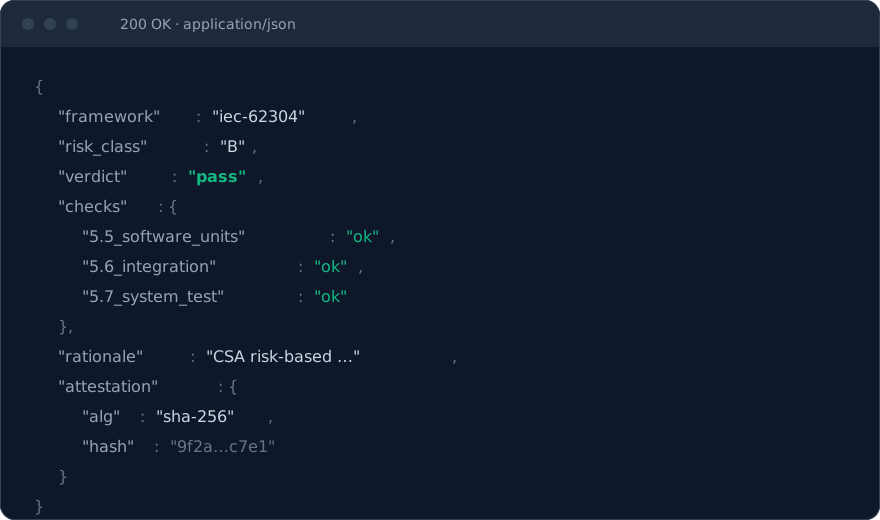
An example response — the rule engine owns the verdict, the model writes the rationale.
Making an audit trust a diff
The Problem
Every software change to an FDA-regulated device needs a Computer Software Assurance (CSA) rationale under IEC 62304. Quality teams write these by hand — hours per change — and the result still varies by whoever held the pen that day.
The Architecture
A deterministic rule engine encodes the IEC 62304 §5.5–5.7 structural requirements per risk class, so the pass/fail verdict never depends on the model. Claude Haiku only drafts the human-readable rationale on top of that verdict.
Key Challenges
Regulatory tooling has to be defensible, not just plausible. The attestation hashes the exact inputs and result so a reviewer can prove nothing changed after the fact, and usage is tracked per key for audit and billing.
What I Learned
The winning split was letting rules own the verdict and the LLM own the prose. That keeps the compliance decision reproducible while still turning a raw diff into language a QE can paste straight into the Design History File.
Built with
Validating regulated software?
VibeVal is in private beta. Reach out for API access and a look at the full framework coverage.